
Connecting systems without losing control of the data
Integration reduces repeated entry when the systems involved agree on ownership and failure handling. Corevelt begins with the business event: what changed, which system needs to know and what should happen next.
Identify the source of truth
For every shared field, name the system that owns it. Decide whether synchronization is one-way or two-way. Use stable identifiers rather than matching only by a display name. Define how updates, deletions and corrected records are represented before scheduling synchronization.
Map and validate records
Document field names, required values, time zones and supported character sets. Arabic text, dates and numeric precision deserve explicit checks. Validate incoming records and separate rejected rows from completed work so one unexpected value does not silently corrupt an entire batch.
Design for interruptions
A connected service can become unavailable. Set sensible timeouts and retry rules, and keep enough information to resume safely. Repeating a completed operation should not create duplicates. Decide whether the user waits for a response or the task continues in the background with a visible status.
Keep operations understandable
- Record when a job started and finished.
- Count completed and rejected records.
- Provide a controlled retry for failed work.
- Limit integration access to the required operations.
A small integration with clear ownership can improve a workflow without replacing every system. Begin with one measurable process and expand when its behavior is understood.
Related articles
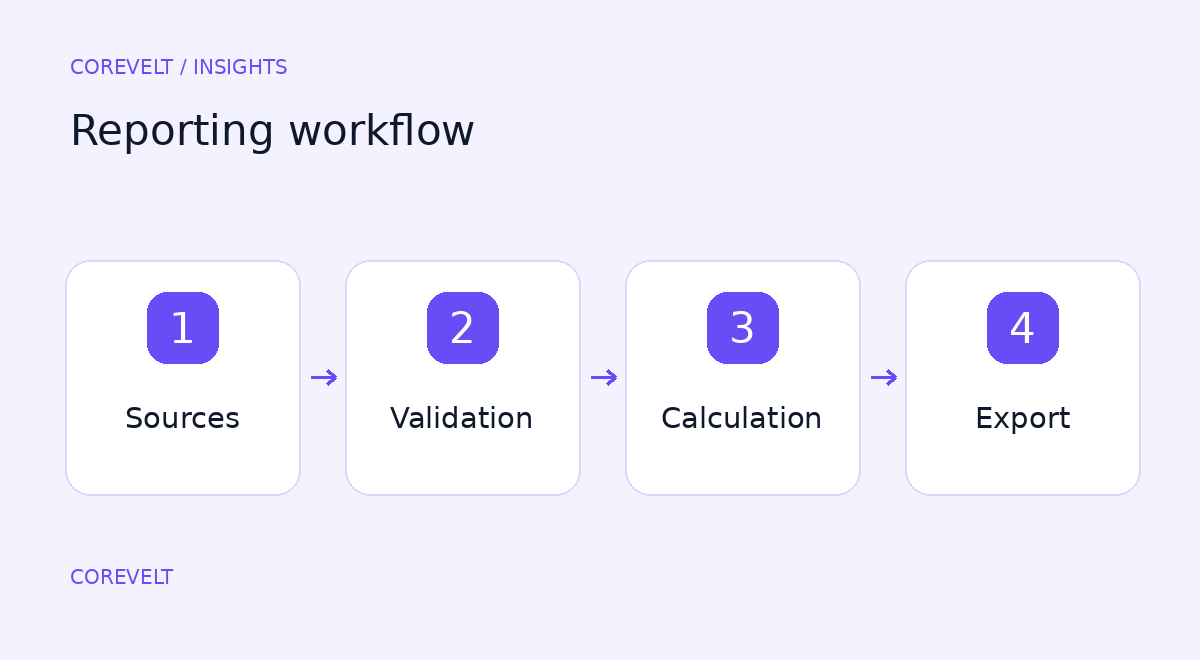
Reports your team can read, verify and reuse
A useful report answers a business question and makes its source understandable.

What a reliable payment integration needs
Connecting a payment button is only the visible part of checkout. A complete integration connects the order, the transaction and the actions taken after payment.

Planning a booking platform beyond the calendar
A booking platform connects availability, pricing, customer requests and the work needed to deliver a service. A calendar is one part of that process.

Planning a website your team can maintain
A maintainable website starts with decisions about content and ownership, before a theme is selected.